How to Build a Budget Planner That Fits Your Life
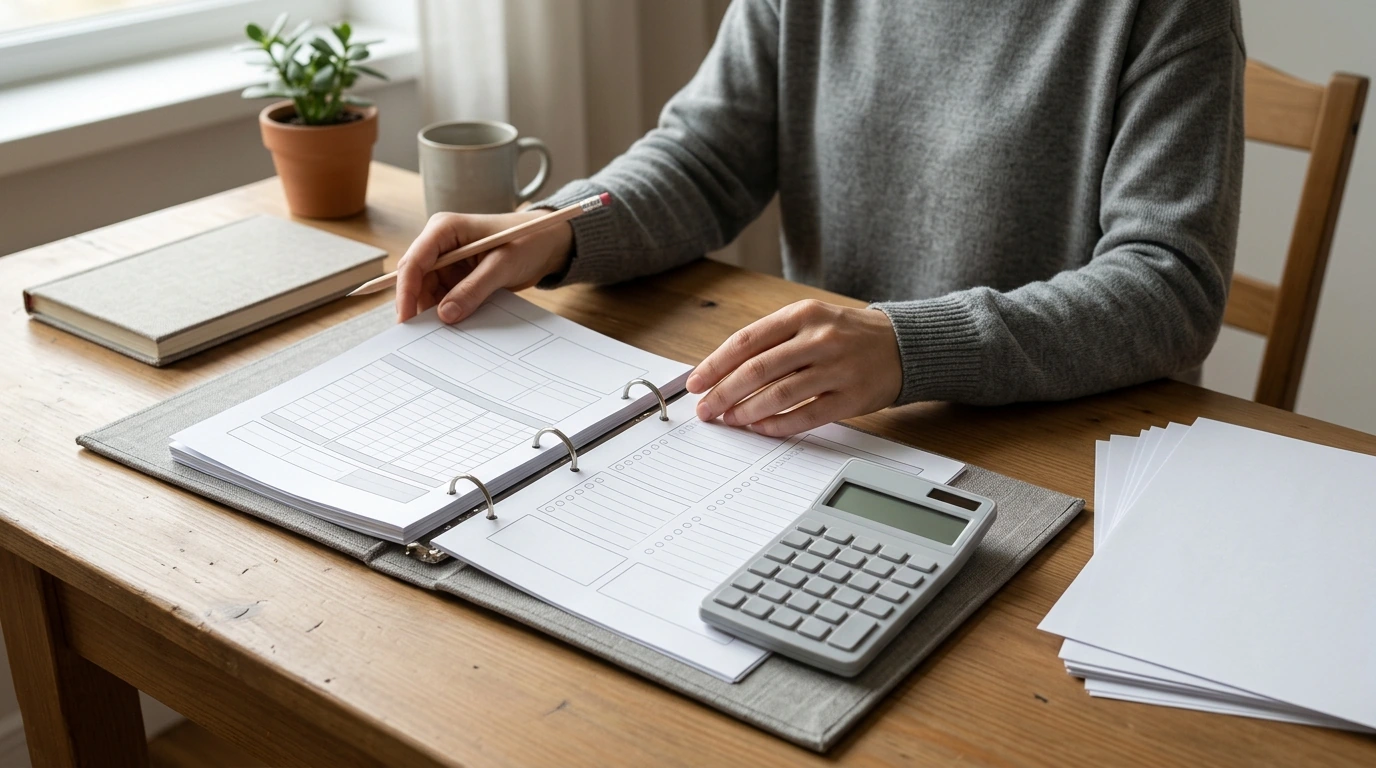
A useful budget planner starts with your priorities, not a one-size-fits-all layout. Whether you want a clearer view of upcoming bills or a simple way to follow a savings goal, your planner should fit the way you manage money.
We offer Build Your Budget, a printable digital guide for creating a planner around your own routines. Start with a few useful pages, give yourself room to adjust, and build a system you can return to without making budgeting feel like another full-time job.
Start With Your Budgeting Priorities
Before choosing a layout, ask what you want your planner to help you do. You might need a reliable place to record regular bills, a way to see where everyday spending goes, or a reminder to set money aside for a goal. Write down your top two or three priorities so your pages have a clear purpose.
Next, consider when you want to plan. A monthly overview can help you see rent, utilities, subscriptions, and other recurring expenses together. A weekly check-in may be more useful for groceries, transportation, and other spending that changes often. You can use both: plan the month first, then make brief weekly updates.
Let your income schedule and bill due dates guide your rhythm. If you receive income at different times each month, recording expected payment dates alongside bills can help you see when money needs to be available. A planner supports practical decisions; it cannot guarantee a particular financial result.
Choose the Pages Your Planner Needs
Your planner does not need a page for every possible expense. Begin with the information you will actually use, and leave space to add details later. The following ideas offer a starting point.
| Page | What to record | How it helps |
|---|---|---|
| Income overview | Expected income and payment dates | Shows what is available to plan around |
| Bill calendar | Amounts and due dates | Keeps upcoming obligations visible |
| Spending tracker | Purchases by category | Helps identify spending patterns |
| Savings goals | Target amounts and contributions | Makes progress easier to follow |
For an income overview, use amounts you reasonably expect to receive rather than counting on uncertain payments. On your bill calendar, include expenses that may be easy to overlook, such as annual renewals or irregular fees. If an amount varies, you can note an estimate and update it when you know the actual charge.
Keep spending categories broad if detailed tracking feels overwhelming. For example, one household category may be enough at first. If you later want more insight, divide it into groceries, supplies, and other purchases. Consumer.gov’s guide to making a budget provides another straightforward starting point for comparing income and expenses.
Put Your Budget Planner to Work
At the beginning of your planning period, list expected income and essential expenses first. Then decide how much you want to assign to other priorities, such as savings, entertainment, or upcoming purchases. If your planned expenses exceed your expected income, revisit the amounts and consider what you can change.
As the weeks pass, record actual spending and compare it with your plan. A category that regularly runs higher than expected may need a larger allocation, while another may have room to shrink. Adjusting your plan is part of using it, not a sign that you have failed.
Set aside a few minutes for a regular review. Check which bills are coming due, update your spending totals, and note any changes to income or expenses. You do not need perfect handwriting or a completed page for every day. A planner that is simple enough to use consistently can be more helpful than an elaborate one you avoid.
For more exercises and tools to explore your financial situation, the Consumer Financial Protection Bureau offers the Your Money, Your Goals toolkit.
Create Your Planner With Build Your Budget
Our Build Your Budget printable digital guide is an eBook download for making a personal budget planner. It is a useful choice if you prefer shaping your own system around your schedule and goals rather than relying on a fixed physical planner.
The guide is listed at $9.99 USD. Visit the product page for current purchase information. Once you have your planner set up, start with the pages that answer your most pressing questions and add sections only when they become useful.
If your budgeting goals are part of a broader personal plan, we also offer the 25 by 25 Goal-Getter Checklist, a digital download focused on life goals by age 25. You can use your budget planner to consider how any financial priorities fit alongside those wider goals.
Before choosing, compare the product details with your daily routine, available space, care needs, and preferred setup. The strongest option is usually the one that fits the intended use clearly and remains simple to clean, store, and check before repeat use.
FAQ
What should I include in a budget planner?
Start with income, bills, spending categories, and savings goals. Add other pages when they serve a clear purpose for you.
Is Build Your Budget a physical planner?
No. Build Your Budget is a printable digital guide and eBook download, not a physical planner.
How often should I review my budget planner?
Choose a routine that suits your income and bill schedule. A weekly spending check and a monthly review are practical starting points.














Leave a comment