Feel It to Lead It: An Emotional Awareness Guide

A difficult conversation, unexpected feedback, or a rushed decision can stir up feelings before you have time to make sense of them. Emotional awareness gives you a place to begin: notice what is happening inside, then decide how you want to respond.
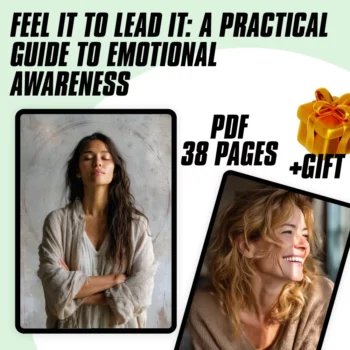
At our store, we see personal development as a practice you can adapt to everyday life. Feel It to Lead It is a practical guide to emotional awareness, available as a PDF eBook for anyone who wants to make that practice part of a personal development routine.
What Emotional Awareness Can Look Like
Emotional awareness means noticing and naming a feeling without immediately judging it or acting on it. You might recognize disappointment after receiving feedback, anxiety before making a decision, or frustration during a disagreement. The aim is not to label yourself as “too sensitive” or force a feeling to disappear. It is to give yourself a clearer picture of what is happening.
For example, feedback at work might leave you feeling defensive. Pausing to notice that reaction can help you separate the feeling from your next action. You might decide to ask a clarifying question rather than respond right away. During a disagreement, noticing worry beneath your frustration may help you explain what matters to you more clearly.
Naming an emotion is a starting point, not an obligation to solve it immediately. Sometimes “I feel unsettled, and I need a little time” is enough information for the moment. You can return to the situation when you have more space to reflect.
Meet Feel It to Lead It
Our Feel It to Lead It eBook PDF download is a practical guide for readers interested in emotional awareness. It is listed at $14.99 USD and is available to purchase as a digital PDF download.
If you are building a personal development routine, the guide offers a way to give emotional awareness a place in it. You can approach the topic at your own pace and consider how it relates to your choices, conversations, and daily experiences. There is no need to expect a particular outcome or get every reflection “right.”
A Simple Emotional Check-In
You do not need a long, quiet afternoon to practice noticing your emotions. The following check-in is general guidance you can try in an ordinary moment; it is not a description of specific exercises in the eBook.
Start by pausing, even briefly. Notice any physical sensations, such as tight shoulders or a quickened heartbeat, and consider what feeling might be present. Then ask what response would be helpful. A thoughtful response could mean speaking up, asking for time, or simply listening before you decide what to do.
| Step | Question to ask | Example |
|---|---|---|
| Pause | What is happening right now? | A conversation has become tense. |
| Notice | What sensations do I feel? | My shoulders feel tight. |
| Name | What might I be feeling? | I may be frustrated or worried. |
| Respond | What would help me respond thoughtfully? | Ask for a moment before continuing. |
If a feeling is hard to name, keep your language flexible. “I might be disappointed” or “something feels uncomfortable” leaves room for your understanding to change. Physical sensations can be useful clues, but they do not always point to one specific emotion. Curiosity is more helpful than forcing an exact answer.
The response you choose can be small. Before replying to a message that upset you, for instance, you might take a break and reread it later. If a decision feels urgent, you might identify what information you still need before committing. The point is to create a little room between noticing a feeling and choosing an action.
Make Room for Reflection
A regular check-in can be as simple as asking yourself how you feel after work or taking a minute before a difficult conversation. Choose a time that fits your day rather than trying to build a perfect routine. You might write a few notes, reflect during a walk, or sit quietly without recording anything.
Over time, look for patterns instead of judging a single reaction. Do certain conversations leave you tense? Do you tend to feel more uncertain when you are rushed? Noticing a pattern may help you decide when to ask for support, prepare differently, or give yourself more time.
For broader ideas about emotional well-being, explore the National Institutes of Health’s Emotional Wellness Toolkit. Self-guided resources can support reflection, but they are not a substitute for professional mental health care. If you need support, the National Institute of Mental Health’s guide to caring for your mental health offers information about seeking help.
Explore the Guide
When you are ready to give this practice more attention, visit the Feel It to Lead It product page to explore and purchase the PDF download. Our team also offers Your “25 by 25” Power-Packed Goal-Getter Checklist as a separate resource if you are working on personal goals. You can choose the resource that fits the kind of reflection you want to make time for now.
FAQ
What is emotional awareness?
Emotional awareness is the ability to notice and identify emotions, including how they may show up in your body and influence your responses.
What format is Feel It to Lead It available in?
Feel It to Lead It is available as an eBook PDF download. Visit the product page for purchase details.
Can emotional awareness replace therapy?
No. Self-guided reflection may be useful, but it is not a substitute for professional mental health care.















Leave a comment