Your Money, Your Rules: How to Create a Budget

A budget is not a set of rules designed to take the fun out of spending. It is a flexible plan that gives your bills, everyday choices, and future goals a place in the same picture. When you know what is coming in and where it needs to go, you can make decisions that reflect your life.
We created this practical starting point to help you build a plan you can adjust as your circumstances change. You do not need perfect numbers to begin; a useful estimate and a willingness to revisit it are enough.
Start With What Comes In and Goes Out
Begin with your monthly take-home income: the money you receive after taxes and other paycheck deductions. Include income you can reliably count on, such as regular wages or benefits. If you are paid weekly or every two weeks, calculate your monthly average carefully rather than assuming every month has the same number of paydays.
Next, review recent bank statements, receipts, and bills. List regular expenses such as rent, utilities, insurance, and minimum debt payments. Then look at everyday spending, including groceries, transportation, subscriptions, and meals out. Your past spending is information, not a reason to judge yourself.
Some costs do not arrive monthly. For expenses such as annual memberships, car registration, or holiday gifts, estimate what you expect to spend over a year and divide that amount by 12. Setting aside that monthly amount can make those bills easier to handle when they arrive.
If your income varies, start with a conservative monthly estimate based on what you can reasonably expect in a lower-income month. Prioritize essential costs first, then decide how to use additional income when it arrives. The consumer.gov guide to making a budget offers another way to organize your starting numbers.
Give Your Money a Job
Once you have your estimates, group them into essentials, flexible spending, savings, and debt payments. Essentials might include housing and groceries; flexible spending can cover choices you can adjust more easily. Savings can support emergencies or upcoming expenses, while a separate debt category can help you see required payments and any extra repayment.
The table below is an illustration, not a formula you have to follow. The amounts add up to $2,000 in monthly take-home income. Your own plan should add up to the amount you have available, and your categories may look different.
| Category | Example amount | What it could cover |
|---|---|---|
| Essentials | $1,200 | Housing, utilities, groceries and transport |
| Flexible spending | $300 | Dining out, entertainment and personal spending |
| Savings | $200 | Emergency savings or a future expense |
| Debt payments | $300 | Required payments and any extra repayment |
A category is only useful if it helps you make a decision. You might separate transportation from housing or create a line for annual expenses. If you include a debt payment in one category, avoid counting it again in another. If your planned spending exceeds your income, revisit flexible amounts and priorities; if essential bills alone exceed your income, you may need to explore additional support or other options.
Make Room for Real Life
A sustainable plan leaves room for things you value, whether that is a weekly coffee, a hobby, or time with friends. Choose limits that fit alongside your necessary expenses rather than cutting every pleasure out at once. Even a modest amount set aside for enjoyable spending can make the plan feel more realistic.
When a cost changes, adjust the plan instead of abandoning it. A higher utility bill may mean spending less on entertainment that month, or an unexpected expense may call for a temporary change to a savings contribution. Write down the trade-off so you know what changed and why.
Try a brief weekly check-in to compare your remaining money with upcoming expenses. At the end of the month, take a fuller look: Which estimates were close? Which bills did you forget? Use those answers to set the next month’s amounts. The Consumer Financial Protection Bureau’s budgeting resources can also help you think through your cash flow.
Use Your Money, Your Rules to Get Started
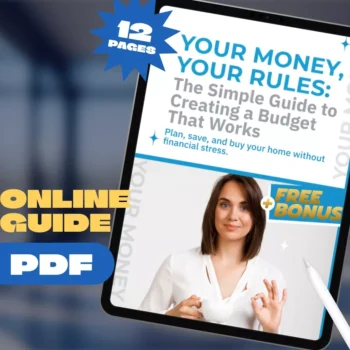
If you want a starting point for creating your own budget, explore our Your Money, Your Rules budget guide. This eBook and budget planner PDF is a personal finance guide for approaching the process of identifying your income, expenses, and priorities. It is listed at $8.99; visit the product page for current details.
Budgeting often goes hand in hand with deciding what you want to work toward. If you are also interested in organizing personal goals, our 25 by 25 Power-Packed Goal-Getter Checklist is a separate digital download focused on life goals and productivity. You can use your budget to decide which goals fit your resources now and which can wait.
Keep Your Budget Working
Start savings goals at an amount you can manage, even if it is small. As income and expenses change, you can adjust the amount or shift your focus between an emergency cushion and a planned future cost. Progress does not have to look the same every month.
FAQ
How do I create a budget for myself?
Start with your monthly take-home income and list your expenses. Assign amounts to your priorities, then review and adjust the plan regularly.
What if my income changes each month?
Use a conservative monthly income estimate and prioritize essential expenses. Adjust your plan when your income is higher or lower than expected.
Do I need to follow a fixed budgeting rule?
No. Common formulas can be useful starting points, but your categories and amounts should reflect your own needs and circumstances.














Leave a comment